01 · STOCK SELECTION
Start with dry, unwaxed corrugate
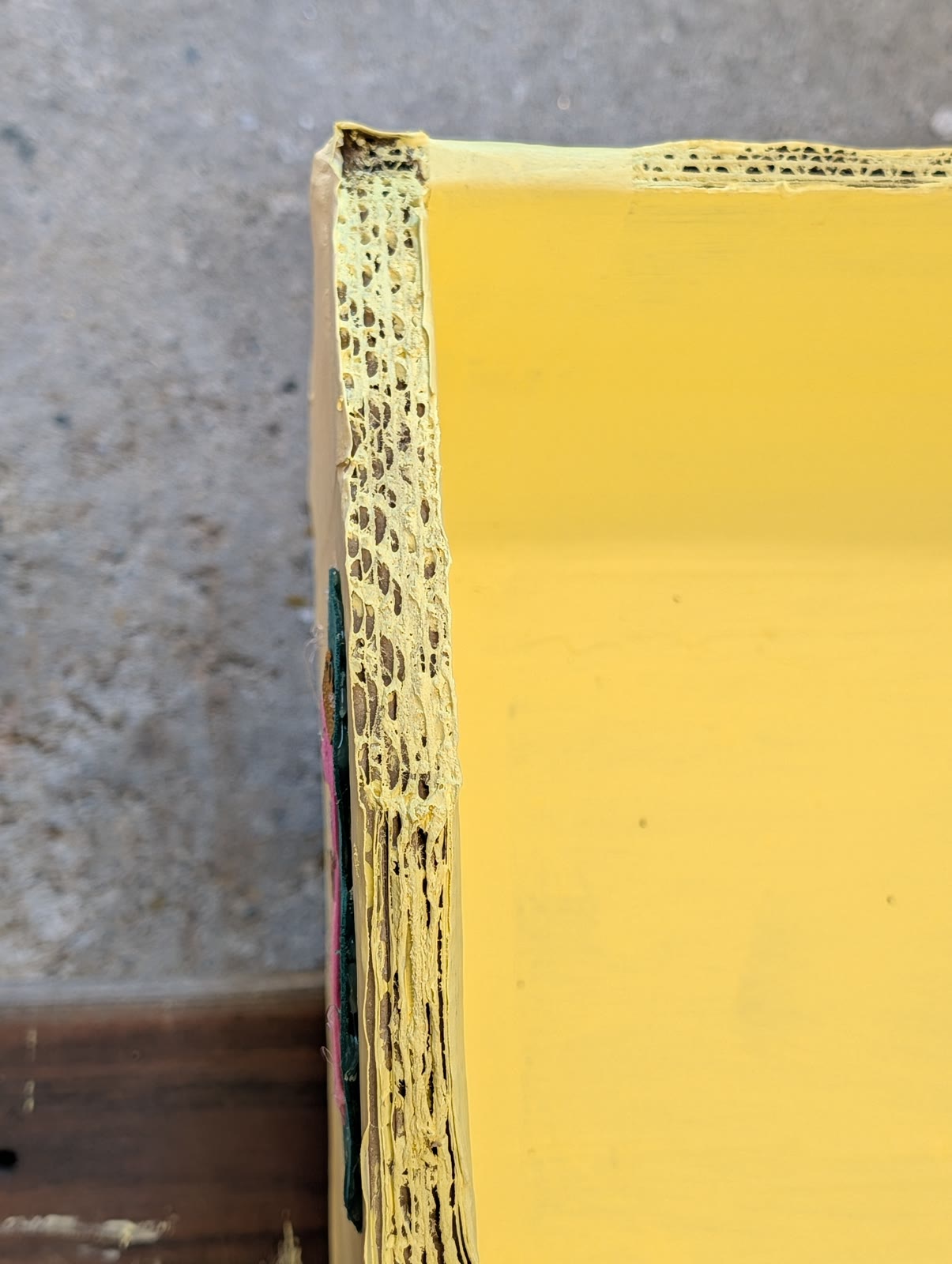
Straight, dry sheets make predictable hull panels. Wax-coated stock, crushed corners, softened folds, and boxes with a damp personal history are set aside. Flutes should run continuously through the largest loads rather than ending at a chine or crew seat.
Race rules vary. The Taft Library race requires corrugated cardboard, prohibits wax-coated stock and several waterproofing materials, and permits tape only at seams and joints. The governing race rules always outrank the yard’s broader experimental program.
02 · LAMINATION
Cross the flutes and spread the load
A single sheet is directional: it resists bending more strongly across one axis than the other. Capt. Dan’s counter-fluted panels rotate adjacent layers so longitudinal flutes carry bow-to-stern loads while transverse flutes control sidewall deflection.
The bottom receives the greatest attention because it carries the crew between bulkheads. Lamination should remain flat while being joined; waves built into a panel become arguments the hull must settle later.
03 · HULL GEOMETRY
Score the chine; do not sever it
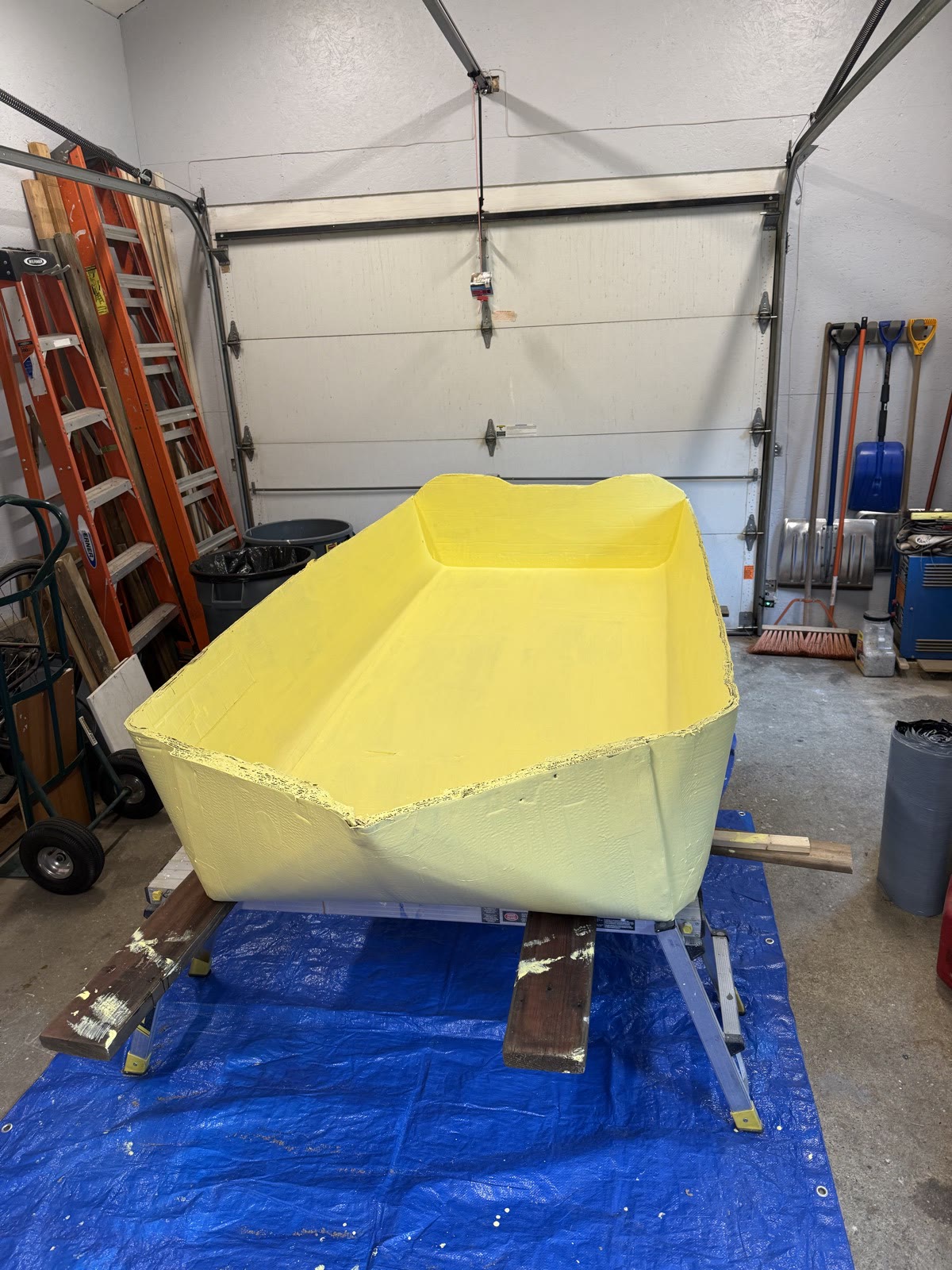
The chine is the fold where bottom becomes side. Compressing the inside face creates a controlled hinge while preserving the outer skin. Broad radii reduce stress concentration. Repeated test folds on scrap establish the correct scoring pressure before a finished panel is touched.
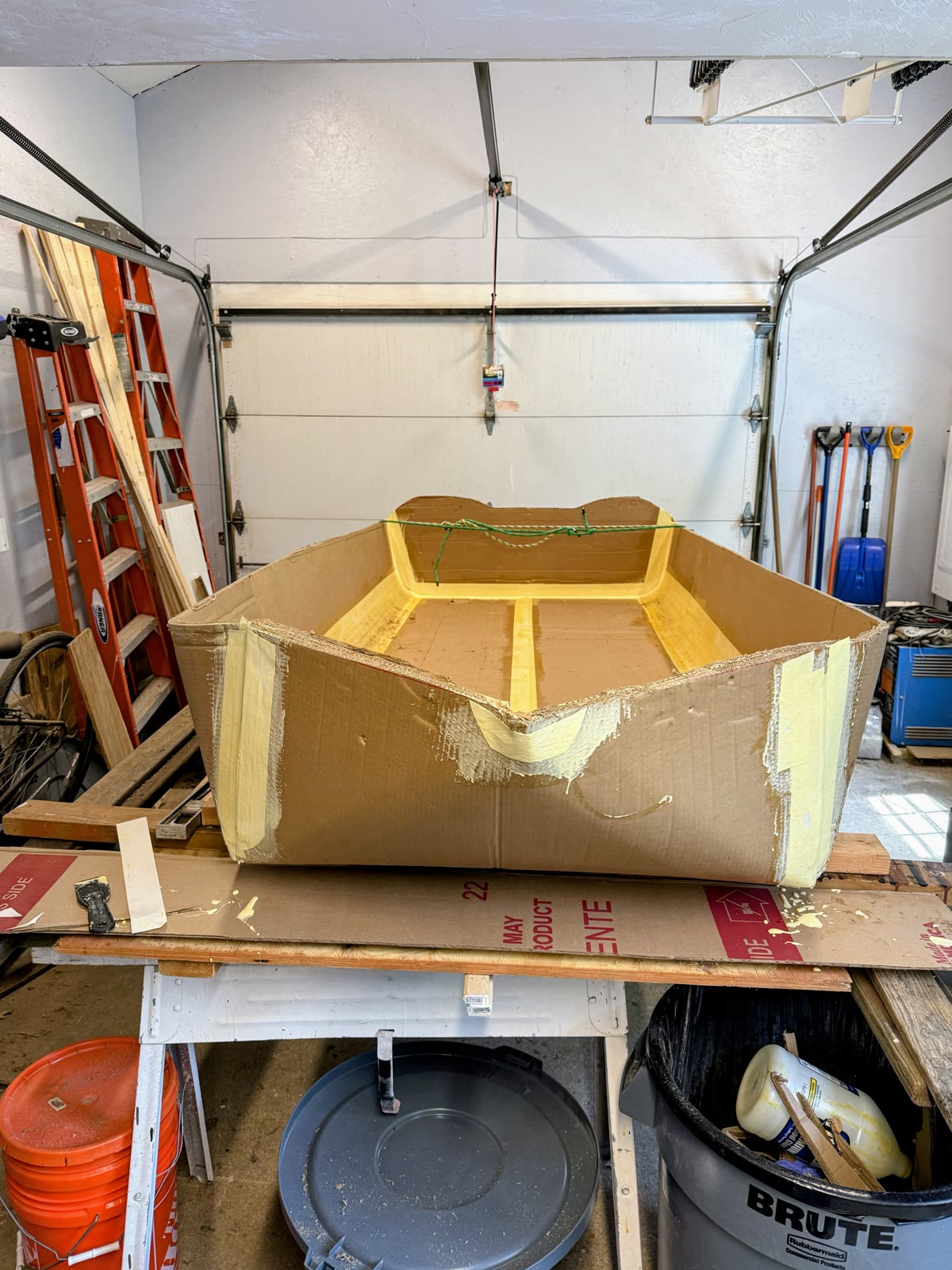
Bulkheads divide long unsupported spans, lock the beam of the boat, and transfer paddler loads into the hull. The centerline spine in The Unsinkable Luau works with transverse frames so the bottom does not rely on optimism alone.
04 · SEAMS AND INSPECTION
Give water no convenient edge
Tape overlaps are laid keelward, like shingles, so spray travels across rather than under an exposed edge. Race-compliant construction concentrates fasteners at joints instead of wrapping the hull.
Before launch, the yard checks sharp edges, seating, visibility, crew clearance, life-jacket access, and every technical rule published by the organizer. A fast boat that fails inspection is merely an unusually shaped spectator.
PHOTOGRAPHIC VESSEL RECORD
Anatomy of The Unsinkable Luau